
Measuring the return on investment (ROI) of human development continues to be a major challenge for organizations. In a previous article, we explored why this topic is is both a strategic business priority and a complex problem: subjective evaluations, the difficulty of quantifying intangible skills, and the lack of reliable methods to monitor their development over time.
Yet one approach stands out: hybrid intelligence. By combining the best of technology and human expertise, it turns previously elusive metrics into actionable insights, and drives lasting transformation for individuals and teams. How? Through behavioral data, tailored profiling, and dynamic progress tracking.
Let’s decode the three levers that finally make the ROI of human development measurable and actionable.
Traditionally, soft skills assessment relies on self-reported data: self-assessment questionnaires, 360° reviews, post-training feedback… While these methods are useful, they quickly show their limits. They are inherently subjective, prone to bias (overconfidence or, conversely, self-undervaluation), and provide only a partial view of reality.
Relying only on what people say about themselves isn’t enough for a reliable assessment. It’s like judging an athlete’s performance based on their self-perception, without ever seeing them in action.
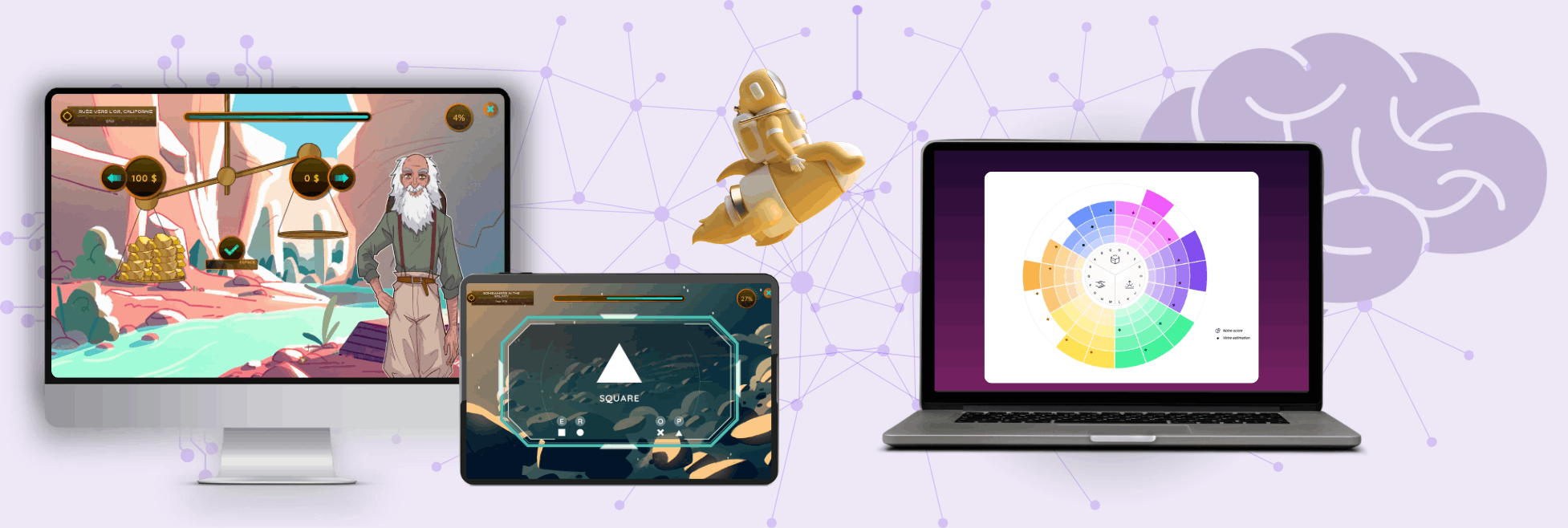
Hybrid intelligence offers an innovative solution to this bias: behavioral measurement, using digital tools inspired by neuroscience. For example, Omind has developed serious games and online exercises that immerse learners in different scenarios to observe their authentic reactions. These games assess what people actually do, not just what others say about them.
They thus reveal traits such as empathy, tolerance for uncertainty, or decision-making style in an objective and concrete way. Even better, they highlight any gap between self-perception and observed behavior: a mirror that is often essential for growth.
No more questionnaire bias: welcome to tangible data on human skills, gathered through engaging yet scientifically validated simulations.
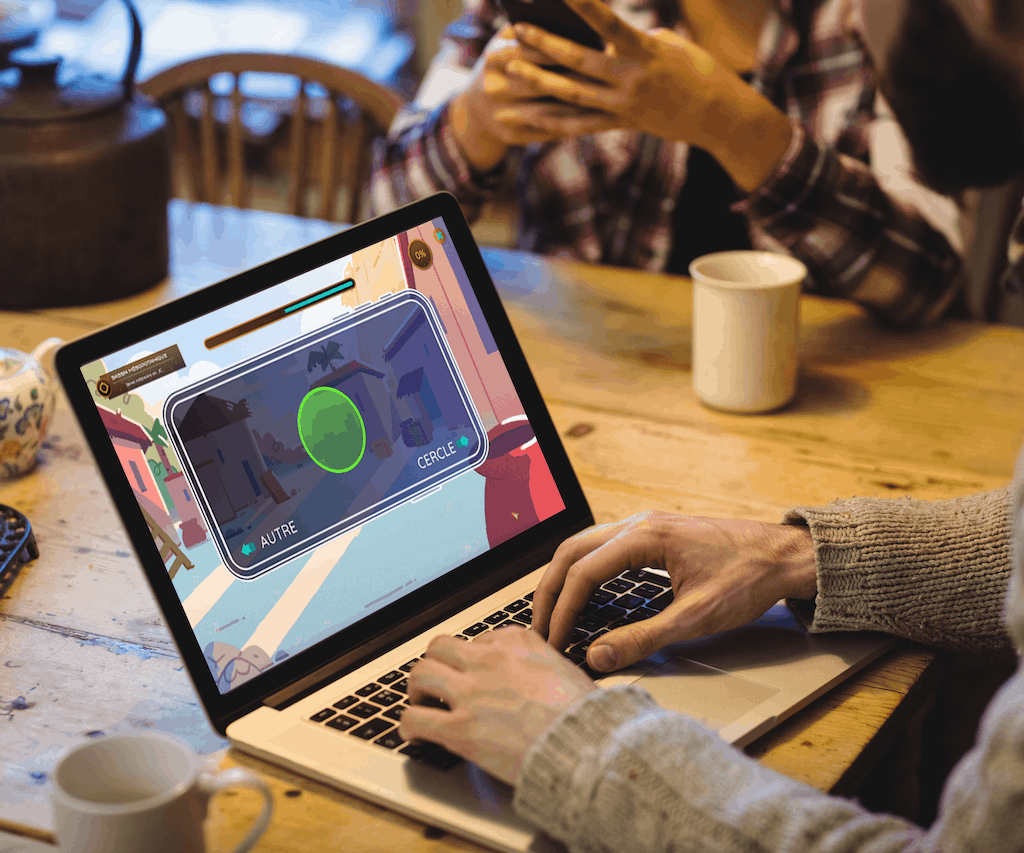
With these approaches, we can precisely map each individual’s behaviors and resources from the outset. For example, Omind’s programs assess 18 key leadership behaviors, emotional, adaptive, and managerial, using neuroscience-based tools. This provides a comprehensive baseline, enabling truly personalized support.
It’s a paradigm shift: development is no longer driven by intuition or broad averages, but by reliable individual measurements. The result? The ROI of soft skills gains credibility. Skills that were once vague, like resilience or emotional intelligence, are now measurable and trackable over time.
Another aspect of hybrid intelligence is, of course, artificial intelligence itself, combined with the expertise of professionals. Rather than being in opposition, these two forms of intelligence strengthen each other.
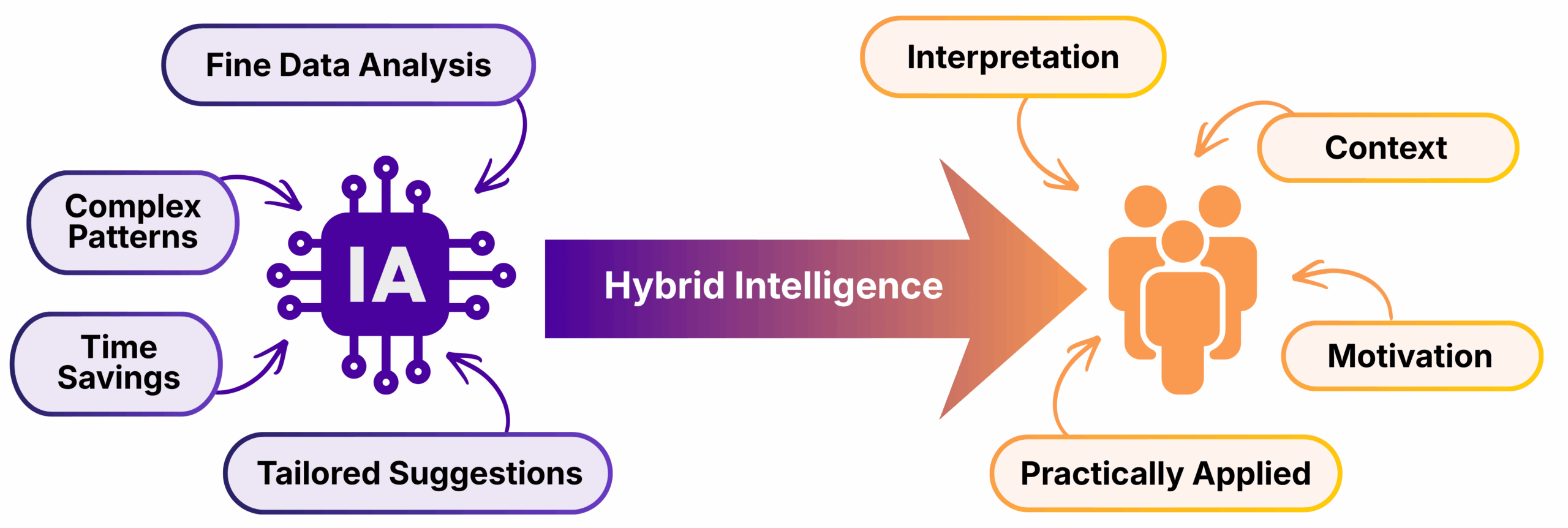
AI analyzes massive amounts of data to reveal patterns invisible to the human eye. Specifically, it:
For example, from the very first assessment, an algorithm can highlight a manager’s “blind spots” (such as difficulty handling uncertainty) and suggest targeted modules to address them. The advantage here is having an objective and straightforward approach, free from subjective bias.
But AI has its limits: it cannot alone drive deep, lasting change. That’s where the human expert comes in:
At Omind, for example, every participant receives a human-led debrief of their results, conducted by a neuroscience-trained coach, and benefits from tailored support.
AI analyzes the data, identifies needs, and delivers personalized recommendations.
Humans provide context, motivation, and fine-tuned adaptation to real-world conditions.
This alliance between data and human expertise is what makes the approach so powerful. It allows to achieve two key goals: ensuring reliable impact measurement and accelerating behavioral change.
This means hybrid journeys that integrate a mix of tools and interactions. For example, a program might include:

This ‘phygital’ format maximizes efficiency: every hour invested targets a clear objective, eliminating generic or unnecessary training. The goal? Maximum impact with minimal effort.
Hybrid intelligence saves time and enhances result reliability. It motivates participants with engaging, personalized journeys while giving leaders confidence through a scientifically validated approach.
Hybrid intelligence doesn’t just assess a single point in time. It tracks skill development as an ongoing process, using regular measurement points (re-tests, feedback, checkpoints) throughout the journey. The result is a clear progression curve, far more informative than a simple before-and-after comparison.
Why Does This Matter? Because the ROI of human development is built over time. By measuring at regular intervals, you can:
The Domino Effect of Soft Skill Development
Progress in human skills triggers a domino effect:
Well-being → Motivation → Performance, and beyond, to collaboration and innovation.
For example, an employee who builds resilience often sees a boost in self-confidence, which in turn fuels motivation, performance, and even lifts their entire team. Omind’s algorithms model these cascading effects to predict the broader organizational impact.

A Predictive Dashboard for HR
This approach enables HR to:
In short, hybrid intelligence gives HR what the compass gave explorers: precision, direction, and confidence. By blending behavioral metrics, AI, and human expertise, it turns ROI into a manageable and nearly predictable lever for growth.
In the next article, we’ll explore how these approaches translate into tangible, real-world results, backed by data, and how they clearly set a solution like Omind apart from more traditional development programs.
Omind’s manager development programs match the ROI of leading executive coaching firms, with measurable results.
Here’s the difference: We deliver the same results in 3x less time (8 weeks instead of 6 months), thanks to behavioral science, real data, and immersive game-based learning. Every program helps managers:
Track skill progress accurately
Measure impact on engagement, collaboration, and performance
Show clear, objective ROI
Want to estimate the potential ROI for your organization? Book a call for a custom estimate 👇
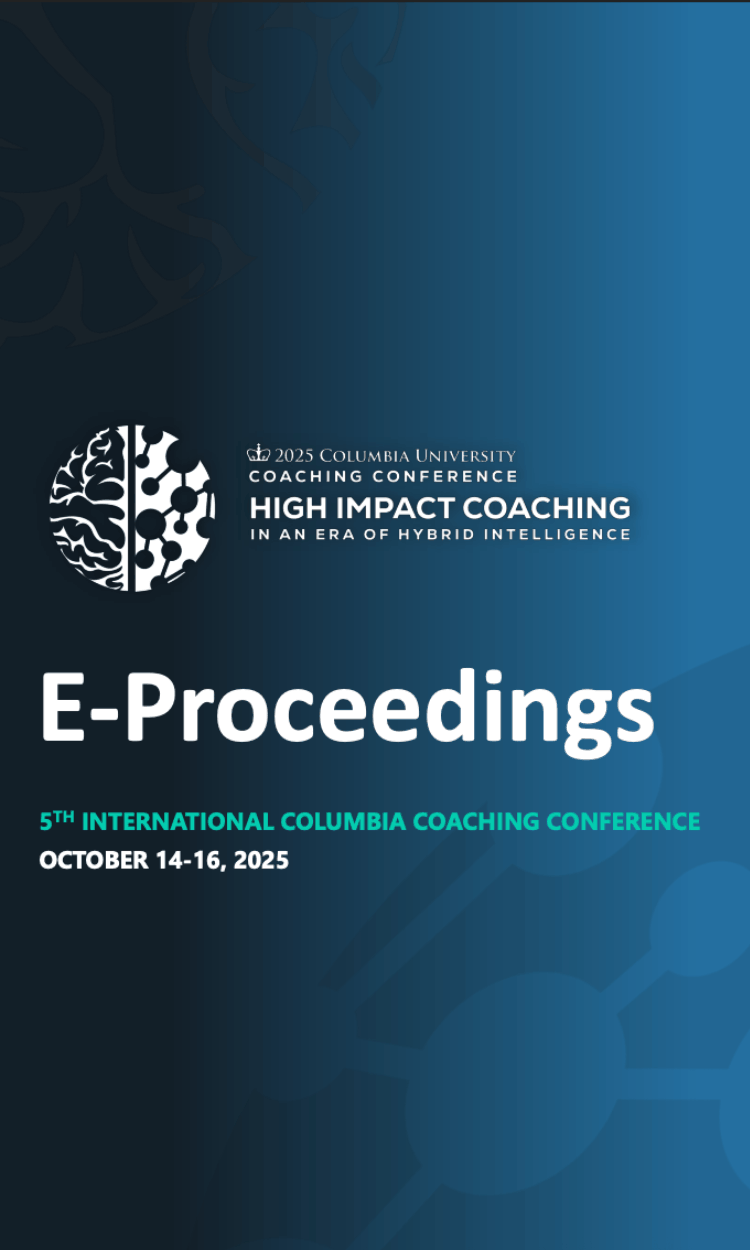
ROI isn’t just theory anymore, it’s backed by rigorous analysis. Our study, published with Columbia University, shows how hybrid intelligence helps measure human development impact and predict ROI more accurately.
* Insights (2018). L&D Trainers: How & why to measure ROI. Blog Insights – citant DDI Global Leadership Survey et LinkedIn Workplace Learning Report .
* Vorecol (2023). Best practices for measuring and optimizing HR ROI. Featured on Vorecol Blog, citing McKinsey, Deloitte, CIPD, and PwC studies.
* Omind (2025). Coaching the Future: How Hybrid Intelligence Unlocks Human Potential and Predicts ROI. Scientific publication (5th Columbia Coaching Conference) .
And with that, you’ll surely want more news and great deals? Subscribe to our newsletter so you don’t miss any of our upcoming content!
Quality certification has been awarded for one or more of the following categories of action: TRAINING INITIATIVES
See our Qualiopi certification here
Copyright 2026 | Omind

