Why the ROI of Human Development Is Becoming Strategic? (1/3)
92% of CEOs don’t clearly see the business impact of L&D initiatives, and only 4% can concretely identify their ROI.
Developing human skills is no longer just an HR issue: it’s a direct driver of business performance. Development programs, from training and coaching to soft skills initiatives, directly shape critical outcomes: talent retention, collaboration, motivation, employees’ sense of effectiveness, and workplace well-being.
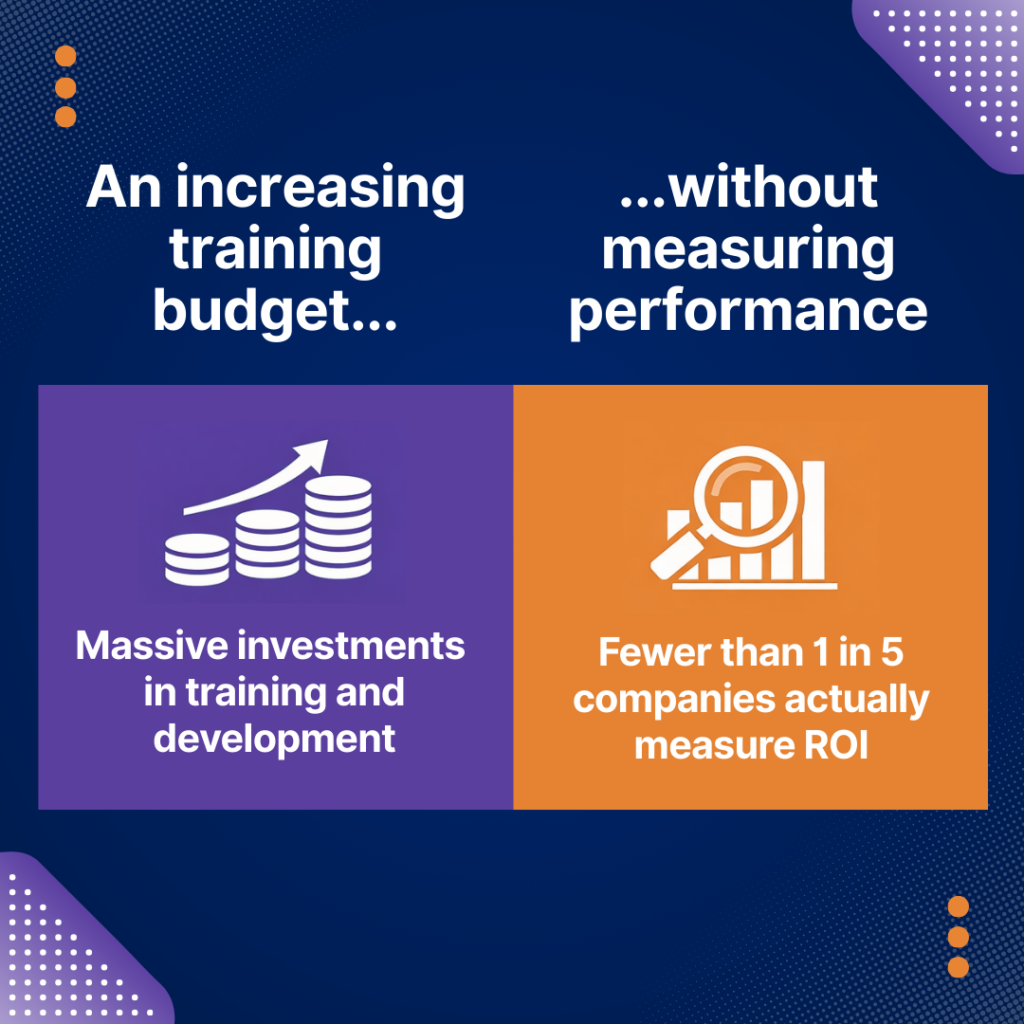
Yet, their impact is still rarely measured. The paradox? Companies invest heavily in human development but struggle to show its ROI.
The numbers speak for themselves: fewer than one in five companies actually measures the ROI of their training programs. As a result, 92% of CEOs don’t clearly see the business impact of L&D initiatives, and only 4% can track their ROI.
Today, every investment must deliver measurable value, which makes tracking the ROI of human development a strategic priority.
Ignoring Human Development ROI: A Costly Paradox for Business
Failing to properly measure human development ROI has real consequences. First, it means making training investment decisions blindly, without solid data to show what actually works and what doesn’t.
This lack of measurement also weakens HR and L&D’s position with leadership: How can you justify major budgets when you can’t prove their impact on business performance?
Not tracking ROI doesn’t just waste money, it costs opportunities. If training programs miss the mark, turnover rises. And replacing an employee can cost 6 to 9 months of salary. Without the right data, you won’t see the problem until it’s too late.
Bottom line: what you don’t measure can quickly drain budgets and weaken your competitive position.
Yet when talent development is properly managed, the benefits are clear.
A McKinsey study found that companies investing in training see 24% higher revenue on average compared to those that don’t. In other words, human development ROI is real, if you track it closely.”
Expectations at the top are shifting: 88% of leaders now say measuring HR ROI is key to success. Why? Because in today’s economy, every dollar invested in people must show its worth. Skip the measurement, and you’re leaving talent potential, and a competitive advantage on the table
From Guesswork to Growth: The Case for Impact-Driven Culture
In response to this paradox, HR and training are undergoing a cultural shift: Measuring human development ROI has become a strategic imperative. The focus is no longer on training as an end in itself, but on managing skill development with the same rigor as any other corporate investment.
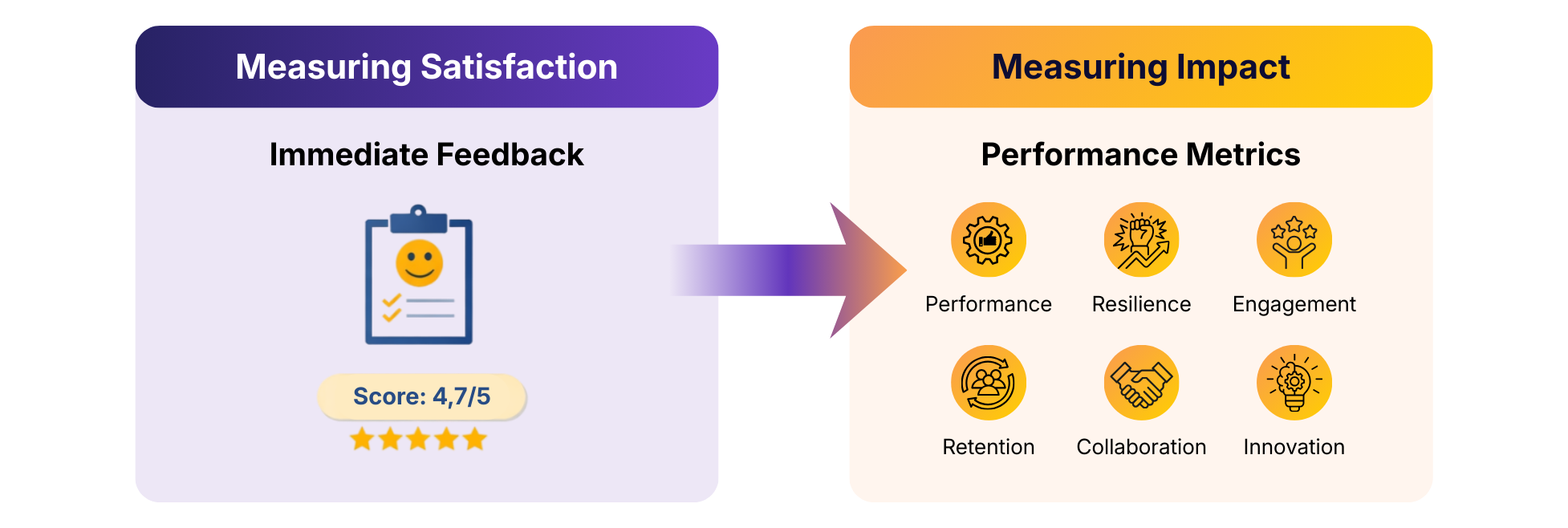
This means moving beyond ‘happy sheets’ (post-training reaction surveys) to track real performance metrics: behavioral change, productivity impact, talent retention, engagement, and more. It’s challenging, (isolating effects, gathering cross-functional data, and tracking progress over time), but it’s non-negotiable.
In fact, 82% of L&D departments admit they struggle to measure business impact and ROI, yet they agree it’s an area where they must improve.
From Gut Feeling to Hard Data
A rigorous ROI approach delivers three key benefits:
Credibility with leadership by speaking the language of KPIs and performance.
Continuous improvement: measuring what works (and what doesn’t) sharpens content, targets real needs, and optimizes budgets.
Strategic alignment: training becomes a tool to hit concrete business goals: building change resilience, driving innovation, or boosting customer satisfaction. In short: Measuring ROI means managing by impact, not intentions.
Training without proof is planning without action.
Here’s the bottom line: in today’s economy, training without proof is just planning without action. But teams that prove the real impact of human development? They don’t just support strategy, they drive it.
Today’s HR and L&D leaders have a chance to shift from being seen asa cost center to becoming value creators. It takes the right methods, tools, and a fresh approach, blending science with pragmatism. And that’s exactly what we’ll dive into next article!
Skills That Scale: Measure, Develop, and Deliver 3x Faster Impact
Omind’s manager development programs match the ROI of leading executive coaching firms, with measurable results.
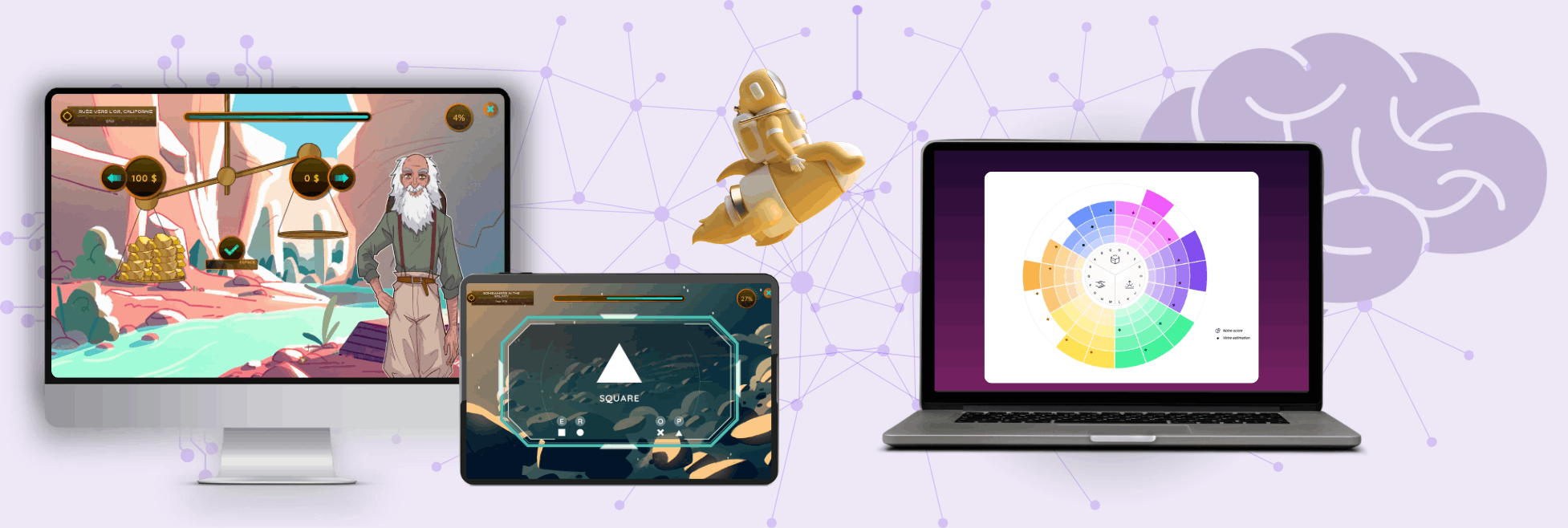
Here’s the difference: We deliver the same results in 3x less time (8 weeks instead of 6 months), thanks to behavioral science, real data, and immersive game-based learning. Every program helps managers:
Track skill progress accurately
Measure impact on engagement, collaboration, and performance
Show clear, objective ROI
Want to estimate the potential ROI for your organization? Book a call for a custom estimate 👇
Need more insights? Get the full study for a deeper dive
ROI isn’t just theory anymore, it’s backed by rigorous analysis. Our study, published with Columbia University, shows how hybrid intelligence helps measure human development impact and predict ROI more accurately.
* Insights (2018). L&D Trainers: How & why to measure ROI. Blog Insights – citant DDI Global Leadership Survey et LinkedIn Workplace Learning Report .
* Vorecol (2023). Best practices for measuring and optimizing HR ROI. Featured on Vorecol Blog, citing McKinsey, Deloitte, CIPD, and PwC studies.
* Omind (2025). Coaching the Future: How Hybrid Intelligence Unlocks Human Potential and Predicts ROI. Scientific publication (5th Columbia Coaching Conference) .